Australia is large. That is not a geographical observation; it is a logistics constraint. Storing all your inventory in a single Melbourne or Sydney warehouse means that a customer in Perth or Brisbane is, from a delivery perspective, in another country.
For eCommerce brands, this geography translates directly into higher shipping costs, longer transit times, and lower customer satisfaction. If 20% of your sales are in WA, but all your stock is in Victoria, you are absorbing a significant freight premium on every Perth order, or charging the customer enough to make them reconsider the purchase.
A smart Australian fulfilment network solves this through distributed inventory. By placing the right SKUs in the right quantity across multiple nodes, you can reduce freight zones, speed up delivery, and protect your margins. This article explains how it works.
Why Australia's Geography Is a Hidden Margin Problem
The Australian population is concentrated in a few major cities separated by vast distances. The distance from Melbourne to Sydney is ~870km. From Melbourne to Brisbane, it is ~1,700km. From Melbourne to Perth, it is ~3,400km.
Carriers charge based on zones. A parcel shipped from Melbourne to a Melbourne address is Zone 1. Shipped to Sydney, it is Zone 2. Shipped to Perth, it can be Zone 4 or 5, attracting a significant cost premium.
If you are shipping all orders from a single location, your average cost per shipment is heavily influenced by your customer distribution. If your brand grows nationally, your average shipping cost will rise as more orders go to interstate zones. This is the hidden margin problem: growth outside your home state makes your operation less profitable per unit.

The Freight Zone Problem and How Distributed Inventory Fixes It
Distributed inventory means splitting your stock across multiple warehouses in different states. Instead of shipping a Perth order from Melbourne, you ship it from a Perth warehouse. The order is processed in Zone 1 rather than Zone 4, saving freight cost and transit time.
Let's look at the actual numbers. A standard 3kg parcel shipped interstate from Melbourne to Perth can cost up to $38.50 and take 5-7 business days via road. The same parcel shipped locally from a Perth warehouse costs $15.50 and arrives in 1-2 days.
By positioning stock closer to the customer, you save on freight and improve the customer experience.
Freight Saving and Transit Benefit Comparison
| Route (From Melbourne) | Single-Node Cost (Zone 4+) | Distributed Node (Zone 1) | Freight Saving | Transit Benefit |
|---|---|---|---|---|
| Melbourne to Sydney | $12.50 (2-3 Days) | $12.50 (1-2 Days) | 0% | 1 day saved |
| Melbourne to Brisbane | $24.00 (3-5 Days) | $13.50 (1-2 Days) | 43% | 2-3 days saved |
| Melbourne to Perth | $38.50 (5-7 Days) | $15.50 (1-2 Days) | 59% | 4-5 days saved |
| Melbourne to Adelaide | $16.50 (2-3 Days) | $13.00 (1-2 Days) | 21% | 1 day saved |
For an eCommerce brand dispatching 1,000 orders per month to WA, moving to a distributed model and shipping those orders locally from a Perth facility saves up to $23,000 in freight costs every month. It also reduces transit times by 4-5 days, leading to higher customer satisfaction and repeat purchases. The savings on interstate freight easily cover the cost of storing stock in an additional warehouse.
How to Decide Where to Place Inventory: Three Criteria That Actually Matter
Splitting inventory across multiple sites does not mean duplicating your entire catalogue in every state. That would double your inventory holding costs and tie up working capital in slow-moving stock.
A smart network uses data to determine which products to place in which locations, based on three criteria:
1. SKU Velocity and Sales Data
Your fast-moving items (Class A SKUs) should be distributed nationally. These are the products that make up the bulk of your volume and where shipping savings will be greatest. Slow-moving items (Class C SKUs) should be held in a single central warehouse to minimize storage fees and prevent stock from sitting idle in multiple locations.

2. Regional Demand Variances
Different states have different product preferences. A swimwear brand will see higher demand in QLD and NSW compared to Victoria, while a brand selling winter coats will see the reverse. Analyze your regional sales data to allocate inventory where demand is highest, rather than splitting it evenly.
3. Lead Times and Supplier Constraints
Consider how quickly you can replenish stock at each warehouse. If your supplier is based in Melbourne, replenishing a Perth facility will take longer than replenishing a local Melbourne site. Factor these lead times into your reorder points to prevent stockouts in distant locations.
Why Technology Is What Makes a Distributed Network Actually Work
Running a distributed network manually is impossible. If your team has to decide which warehouse to ship every order from, or if you have to log into three different portals to check stock levels, the operational overhead will wipe out any freight savings.
A distributed network requires a WMS that integrates with your eCommerce platform and automatically routes orders to the warehouse closest to the customer, based on stock availability and destination zone.
It also requires real-time inventory synchronization. When a product sells in Melbourne, your store's total stock level must update instantly, while the WMS tracks the physical location of the remaining units to ensure accurate picking.

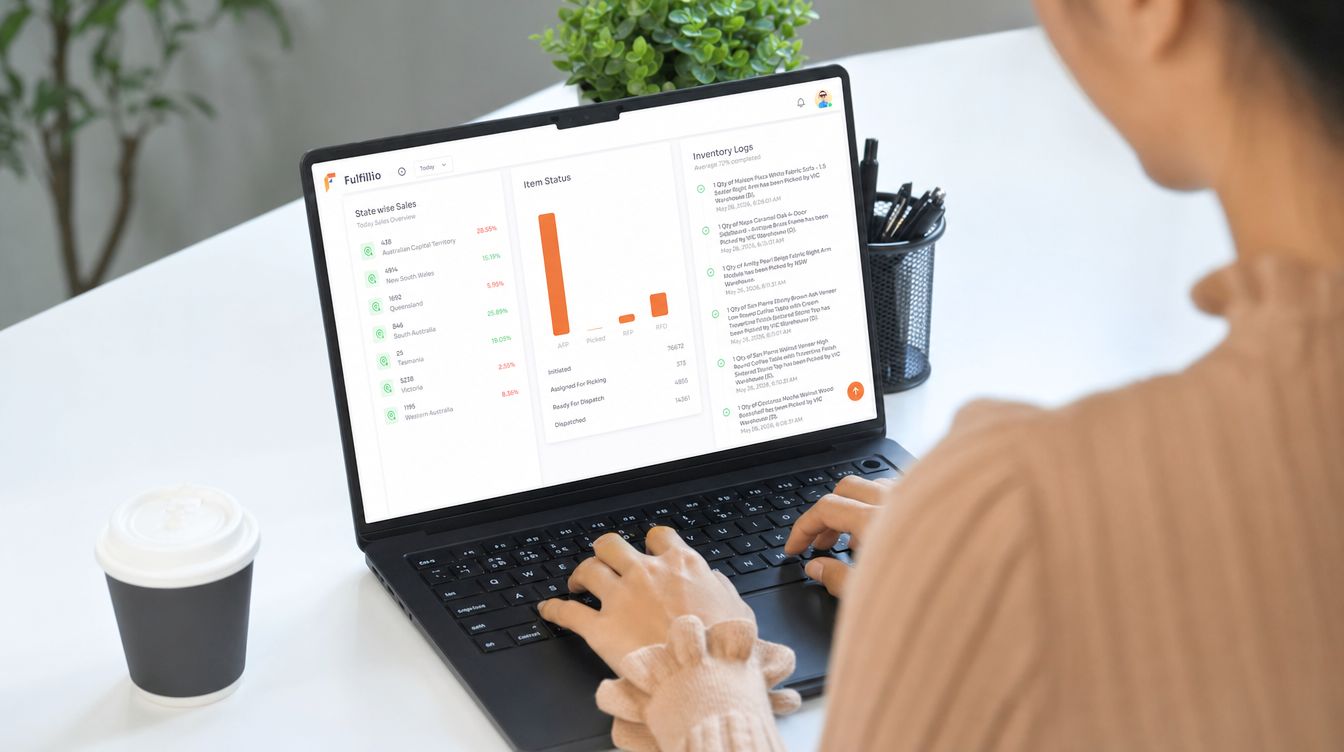
Fulfillio's proprietary technology stack manages order routing automatically across our five distribution centres. When an order is placed on your site, our routing engine identifies the customer's address, checks stock availability across our warehouses, and assigns the order to the closest facility in real time. You have complete visibility through a single dashboard.
Delivery Promises Are Only as Strong as the Network Supporting Them
Australian shoppers have high expectations. They expect clear, accurate delivery estimates at checkout and reliable tracking throughout the journey.
If your network is single-node, you cannot offer consistent delivery promises. A promise of "2-3 days delivery" that is met in Melbourne will fail in Perth, leading to customer frustration and support tickets.
A distributed network allows you to offer localized delivery promises that are realistic and SLA-backed, such as "next-day dispatch, local delivery" in every major city. This build trust and drives repeat purchases.
Fulfillio operates owned facilities in Melbourne, Sydney, Brisbane, and Perth, providing true national coverage without subcontracts. We dispatch 65,000 orders monthly with a 99.8% accuracy rate, helping brands deliver on their promises every day.