FREQUENTLY
ASKED QUESTIONS
Everything you need to know about fulfilment, warehousing, shipping, inventory, onboarding and working with Fulfillio. Straight answers from the operations floor.
MOST ASKED QUESTIONS
What you need to know to get started.
All questions
49 answersThird-party logistics (3PL) means outsourcing your warehousing, fulfilment and distribution to a logistics partner like Fulfillio. Not every business has the space, time or capital to run a warehouse network of its own.
A 3PL bridges that gap. Storage, inventory control, order fulfilment, shipping, returns and value-added services. All under one connected system.
Standard warehousing is storage. 3PL goes well past it. A true 3PL partner becomes an extension of your business: receiving goods, storing inventory, processing orders, packing, shipping, handling returns and integrating with your systems for full visibility.
With Fulfillio you also get automation, real-time reporting and a national network, built to lift accuracy, cut cost and improve the customer experience.
A 3PL physically handles your warehousing, pick and pack, and last-mile delivery. A 4PL manages your entire supply chain, including coordinating multiple 3PLs.
Most Australian brands need a 3PL. If you are running complex multi-country logistics across more than one fulfilment partner, a 4PL conversation may be relevant.
A standard 3PL provides warehousing, pick and pack, and carrier dispatch. A premium 3PL operates as a strategic partner.
- Infrastructure configured around your specific product.
- Proprietary technology that integrates directly with your systems.
- A stable workforce with genuine operational accountability.
- Sustainability data that supports your ESG reporting.
The difference shows up most clearly when something goes wrong, or when your business changes fast.
Our people. A dedicated in-house IT team builds the technology, automation and reporting around each client. No off-the-shelf software, no workarounds.
Four things no competitor claims at once: specialised infrastructure for products others reject, 100% in-house technology, real sustainability, and full national coverage across all six states.
Recognised at LogiSYM 2026 as Best Technology Adopter, and ASCLA 2025 for Workplace Health & Safety.
There are no limits on the type or size of business we support. We have deep expertise in big, bulky and high-value products for premium furniture and lifestyle brands.
We also support retail, consumer goods, electronics, fashion, eCommerce, specialty products, and industrial and B2B sectors. Infrastructure and technology are adapted to each.
Melbourne is the logistics heart of Australia. It sits near major ports, airports and national highways, which makes it a strong hub for fast distribution across every state.
It also offers more industrial land than other cities, supporting advanced infrastructure and scale. Our Melbourne distribution centre is one of our largest and most advanced facilities.
Yes. We operate distribution centres in Melbourne, Sydney, Brisbane and Perth, positioned to lift speed and reduce delivery cost nationwide.
We continue to expand into new cities and regions as client demand grows. Wherever your customers are, we deliver.
No minimums. We work with brands at any stage of growth, from early scale-ups to established national retailers.
If you sell complex, high-value or oversized products, the fit matters more than the volume. Talk to operations and we will tell you straight whether we are the right partner.
A well-managed transition typically takes four to six weeks for a straightforward operation. Complex products, large SKU counts or system integrations can extend that to eight to twelve weeks.
Ask for a written onboarding timeline before you sign anything. If a provider cannot give you one, that is your first signal about how they run projects.
It varies. Some providers work from 100 to 200 orders per month. Larger national operators generally focus on clients spending $5,000 or more per month on fulfilment.
If your volume is below 500 orders per month, look at specialist eCommerce 3PLs before approaching national generalists.
A parallel-run transition, where both providers are active for two to three weeks, typically takes four to eight weeks end to end. Avoid switching during peak trading.
The short-term cost of a well-managed transition is almost always lower than the long-term cost of staying with a provider that is underperforming.
Key indicators:
- Order accuracy below 99%.
- Consistent late dispatches.
- No real-time inventory visibility.
- Slow response to claims, and no proactive communication when something goes wrong.
If you are finding out about problems through customer complaints rather than your 3PL's own reporting, that is a structural issue, not an isolated incident.
Three questions:
- Do they flag issues before you find out through a customer complaint?
- Can you pull your own inventory and outbound reports without requesting them?
- Have they adapted their operation to your product, or do you adapt your product to their constraints?
If the answer to any of these is no, you have a warehouse relationship.
For standard eCommerce parcels, general experience is usually enough. For anything non-standard, oversized furniture, fragile items, high-value goods, category experience is not optional.
Ask for references from businesses with similar products. A provider that handles 45 kg commercial appliances every day runs a fundamentally different operation to one built around clothing.
Not necessarily, and often not over the full cost of the relationship. Hidden fees, damage claims, inaccuracy costs and the friction of a poor-fit provider add up fast.
A premium 3PL that eliminates errors, reduces damage and delivers clean compliance data typically delivers a lower true cost than a cheaper provider with poor accuracy, even when the headline rate is higher.
For an efficiently run operation, the benchmark is 8 to 15% of gross revenue. Brands targeting 20% or higher net margins should keep fulfilment below 12% of revenue.
If you are consistently above 15%, audit your 3PL contract, carrier rates, inventory positioning and packaging, in that order.
Fulfilment cost should not exceed 20% of average order value. For a brand with a $100 AOV, the all-in cost per order should stay under $20.
Above this threshold, scaling revenue without fixing the model makes the margin problem worse.
The common ones:
- Damage claims from inadequate handling.
- Long-term storage fees on slow-moving inventory.
- Carrier surcharges from incorrect packaging dimensions.
- Customer lifetime value lost to inaccurate orders.
None of these appear as obvious line items on a standard 3PL invoice.
Directly. Your 3PL determines inventory positioning, accuracy rates, returns speed, packaging efficiency and your Scope 3 compliance position.
A 3PL that reduces errors and positions inventory intelligently protects margin on every order you dispatch.
Every operation is different, so we don't believe in generic rate cards or one-size-fits-all pricing.
Once we receive your enquiry, our team will review your requirements and arrange a call to understand your products, volumes and network needs before preparing a tailored proposal.
That depends entirely on how the SLA defines it, and this is where many businesses get caught. One Australian retailer discovered after signing that same-day dispatch was defined as any time before midnight. The SLA was technically met every day.
Read the definitions, not the headlines. Ask: what is the cutoff time for same-day dispatch, and what happens if that cutoff is missed?
White-glove delivery uses trained handlers who bring the product inside, unpack it, complete assembly and remove the packaging.
Any brand selling products above $500 in value should treat white-glove as the baseline standard, not a premium add-on.
We run to 100% order accuracy. If we get it wrong, we fix it. No charging you for our error, no shifting it onto your customer.
Across our network we dispatch around 65,000 boxes per month. Accountability sits with one team, not a chain of subcontractors.
Ask specifically:
- What percentage of warehouse staff are direct employees versus casual or agency workers?
- What is the average tenure of your warehouse team?
- What is your staff turnover rate over the last 12 months?
A premium 3PL answers with specific numbers. A standard provider gives a general statement about experienced teams, which usually means high turnover and heavy reliance on casual labour.
Yes, significantly. Returns processed within 24 hours put inventory back into sellable stock faster. A return that takes 14 days to process is inventory you cannot resell for 14 days.
For businesses with return rates above 10%, faster returns processing is one of the highest-ROI improvements available.
A standard warehouse stores inventory and dispatches orders. A strategic fulfilment centre acts as a brand touchpoint, controlling packaging quality, last-mile experience and returns in a way that reflects your standards.
It integrates with your systems, sits close to your customer base, and is managed by a team accountable for brand outcomes, not just throughput.
Common signals:
- Return rates climbing without a clear product cause.
- Reviews mentioning delivery rather than the product.
- No ability to offer reliable delivery windows.
- Basic inventory questions that need your account manager to check and call back.
Yes. Our WMS, ERP, TMS and client portal are all built in-house, so integration is engineered to your stack rather than bolted on.
If you need it, we build it. You get real-time visibility through one operations dashboard.
For most brands with a genuinely national customer base, four to six well-positioned nodes covering Melbourne, Sydney, Brisbane, Perth and Adelaide can deliver one-to-two-zone freight on the majority of orders.
Smaller brands growing toward national scale can typically manage with two or three nodes initially, expanding as order data confirms where the next facility adds the most value.
Five distribution centres: two in Melbourne, plus Sydney, Brisbane and Perth. Together they cover all six states: VIC, NSW, QLD, WA, SA and ACT.
46,000 m² of warehouse space. 85,000 pallet spaces. VNA racking to 12 metres, which means more capacity in less space, and lower storage cost for you.
It increases total storage cost slightly while reducing per-order freight cost significantly. For most brands shipping more than 500 orders per month to geographically spread customers, the freight savings exceed the added storage cost at a relatively modest volume.
The break-even depends on average order value, product dimensions and freight zone distribution. In most cases the payback is measured in months, not years.
Run a postcode-level analysis of your last 12 months of orders and overlay it against your current warehouse locations.
If more than 20 to 25% of orders cross three or more freight zones from your facility, you are paying a structural premium on those orders. That is the signal to evaluate a distributed model.
From an eastern-seaboard warehouse in Melbourne or Sydney, standard freight to Perth typically takes four to seven business days. From a Perth-based facility, the same product reaches metropolitan WA in one to two business days.
For any brand with meaningful WA volume, this gap affects both delivery experience and repeat purchase behaviour.
Yes, and it is one of the main reasons brands use a national 3PL rather than running their own facilities. A multi-city 3PL handles infrastructure, staffing and coordination while you retain visibility and control through a unified client portal.
The quality of the WMS connecting those locations is the critical factor.
Brands selling products with high freight cost relative to product value benefit most. Big and bulky goods, furniture, homewares, appliances, gym equipment, are strong candidates because their freight cost is already high and the zone premium is proportionally larger.
Premium products also benefit, because reliable delivery promises and shorter transit times are part of the experience the customer expects.
A facility close to your primary customer base reduces transit time, lowers freight zone cost, and lets you make more reliable delivery promises.
For a brand with a nationally dispersed Australian customer base, multi-node inventory is not an upgrade. It is a margin requirement.
The industry benchmark is 20 to 30% of total inventory value per year. Businesses consistently above 25% should audit their SKU range, storage costs and demand forecasting.
The target for well-managed operations is 15 to 20%, achievable through better turnover velocity, SKU rationalisation, and a 3PL that charges transparently without compounding long-term storage fees on slow movers.
They are the same thing expressed differently. Both refer to the total cost of holding unsold inventory over time: storage, insurance, capital cost, depreciation and shrinkage risk.
The terms are used interchangeably across accounting and operations literature.
Research from Unleashed Software and Netstock indicates small and mid-sized businesses typically hold around $142,000 in inventory above actual demand, roughly 38% more than current sales velocity would justify.
Much of this accumulated during pandemic-era supply chain disruption and became embedded in procurement even after supply chains stabilised.
The fastest lever is clearance: bundled promotions, channel-specific discounting, or bulk sale to a secondary market. The margin is lower than regular pricing, but always higher than carrying that stock for another three to six months while it depreciates.
In parallel, fix the root cause through demand forecasting and SKU rationalisation so the cycle does not repeat.
Yes, in two ways. A 3PL with real-time inventory reporting lets you spot slow-moving stock before it becomes a liability. A 3PL that charges long-term storage surcharges after 60 or 90 days applies a compounding cost to your slowest movers, the exact SKUs already costing you the most.
Both the reporting quality and the fee structure of your 3PL have a direct, measurable impact on your annual carrying cost.
Scope 1 covers direct emissions from sources you own or control: company vehicles, boilers, on-site processes. Scope 2 covers indirect emissions from purchased electricity. Scope 3 covers all other indirect emissions in your value chain, upstream and downstream.
In most industries, Scope 3 represents more than 70% of total emissions.
Group 1 entities must begin disclosing Scope 3 emissions for financial years commencing in 2026. Group 2 entities start from July 2026.
Any business in a Group 1 or Group 2 entity's supply chain will also be asked for emissions data, regardless of its own mandatory reporting status.
Yes. Emissions from your warehousing and freight providers fall into Scope 3 Category 4 and Category 9. A logistics partner with solar-powered facilities and available carbon data actively reduces your reported Scope 3 number.
Fulfillio runs solar-powered facilities, a lithium fleet and paperless operations across every site.
ASIC has confirmed a three-year modified liability period for Scope 3 disclosures. This protection does not apply to disclosures made fraudulently.
After the transition period, Scope 3 data will require the same reasonable assurance as financial statements.
Start with a materiality assessment of which Scope 3 categories apply to your business. Then audit your data sources.
Where supplier data is unavailable, spend-based estimation can be used short term, but the goal is supplier-specific data over time.
Group 3 entities with no material climate-related financial risks may qualify for a limited exception.
However, most businesses in any large company's supply chain will need to engage with emissions measurement regardless of their own mandatory reporting status.
Under Australia's ASRS mandatory reporting standards, large entities must disclose Scope 3 supply chain emissions from logistics partners.
A fulfilment partner with solar-powered facilities, an electric fleet and paperless operations reduces both your Scope 3 footprint and your compliance risk.
HELPFUL RESOURCES
Longer reads for when an answer raises the next question.
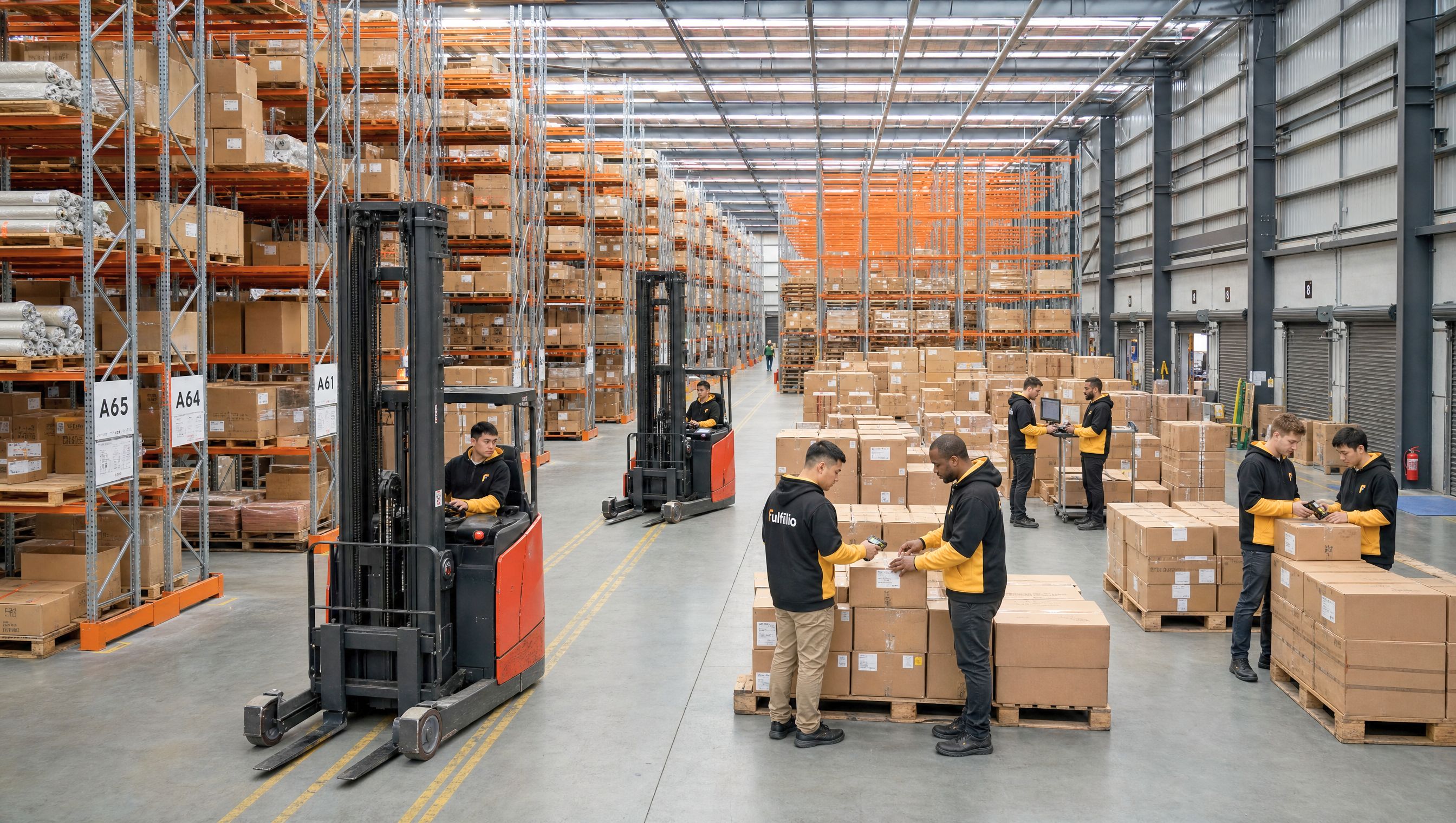
How to Choose the Right 3PL in Australia (2026 Guide)
A practical guide for Australian retail and eCommerce brands evaluating fulfilment partners. What to ask, what to avoid, and how to model the real cost before you sign.
Read the guide →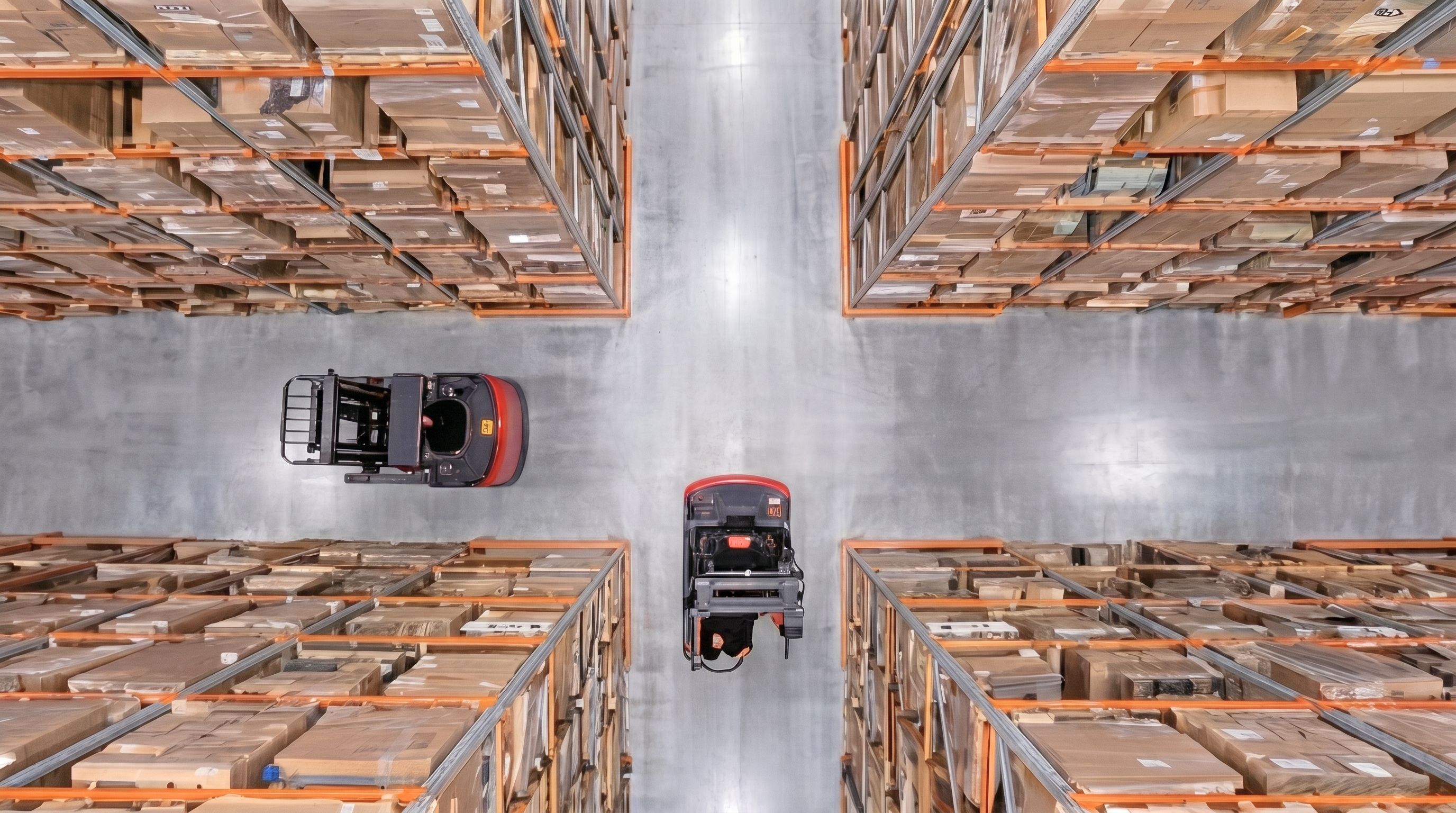
What a Premium 3PL Partner Actually Delivers (and How to Tell if Yours Does)
Four operational pillars that separate a genuine logistics partner from a warehouse with a client portal. Use this as a diagnostic, not a sales checklist.
Read the story →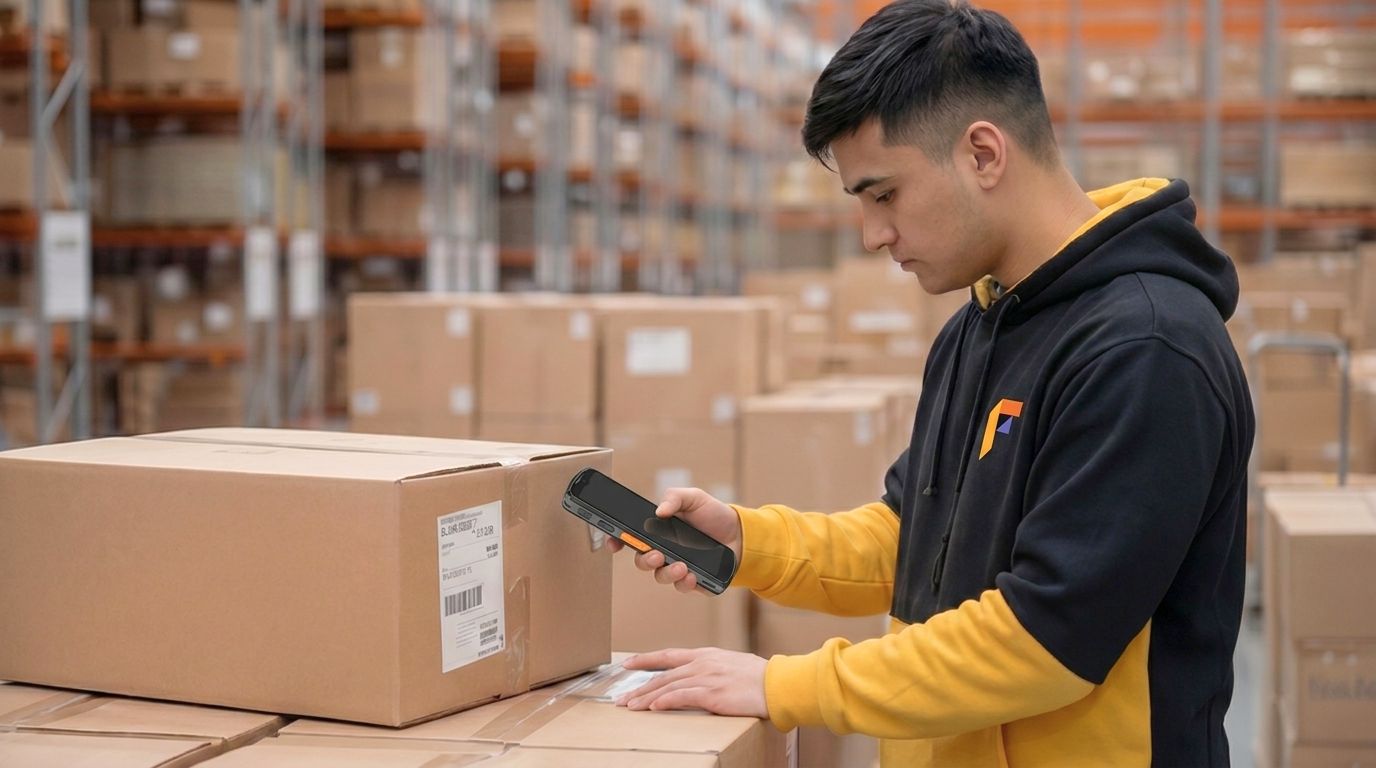
Fulfilment Costs Are Quietly Eroding Your Margin. Here Is How to Audit and Fix Them.
The average eCommerce business loses 35 margin points between gross and net profit. A significant share sits inside logistics decisions that have not been reviewed in years.
Read the briefing →STILL HAVE QUESTIONS?
Speak with a fulfilment specialist.
Tell us what you ship and where it goes, and we'll design a solution that fits your operation.
Start Growing with Fulfillio
Have questions or need a quote? Our team is ready to help you simplify logistics and scale with confidence.

Newsletter
Subscribe our newsletter to get our latest update & news.
© Fulfillio. All Rights Reserved.